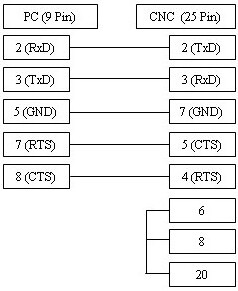
The Fanuc 6M and 6T control units are renowned, robust mainstays of industrial CNC machining. Achieving reliable DNC data transfer requires precise configuration of both machine parameters and serial interface settings. Successful RS232 communication relies on matching critical parameters, such as baud rate, parity, and stop bits, while ensuring the cabling matches your chosen handshaking protocol. Common pitfalls often stem from misaligned flow control—specifically when attempting to use hardware RTS/CTS handshaking versus software XON/XOFF protocols. Ensure your cabling schematic is verified for your specific machine's port configuration; otherwise, intermittent data drops or "buffer overflow" errors are likely to occur during file transmission. Always verify that your PC port settings strictly mirror the CNC parameter definitions to prevent communication timeouts or framing errors during load/punch cycles.
| Parameter | Value | Comments |
|---|---|---|
| 340 | 2 | |
| 341 | 2 | |
| 311 | 0001 1000 (Baud 2400) | |
| 0001 0110 = 600 | ||
| 0001 0111 = 1200 | ||
| 0001 1000 = 2400 ** | ||
| 0001 1001 = 4800 | ||
| 0001 1010 = 9600 | ||
| TV On/Off | 0 = Disabled | |
| Punch Code | 1 = ISO | |
| Input Unit | 0 | |
| Input device | 1 = 1 | |
| Input Device | 2 = 1 | |
| In EasyDNC set Baud Rate, Parity, DataBits and StopBits as above. Set 'Mode=Auto or Fanuc' | ||
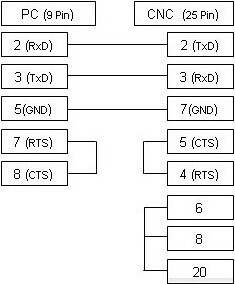
The cable diagram shown above is the most commonly utilized configuration and supports xOn/xOff (software) flow control (DC1/DC3). If your CNC machine is specifically configured for RTS/CTS (hardware) flow control, please refer to the alternative wiring diagram below, which is designed to be compatible with both control methods in most industrial environments.